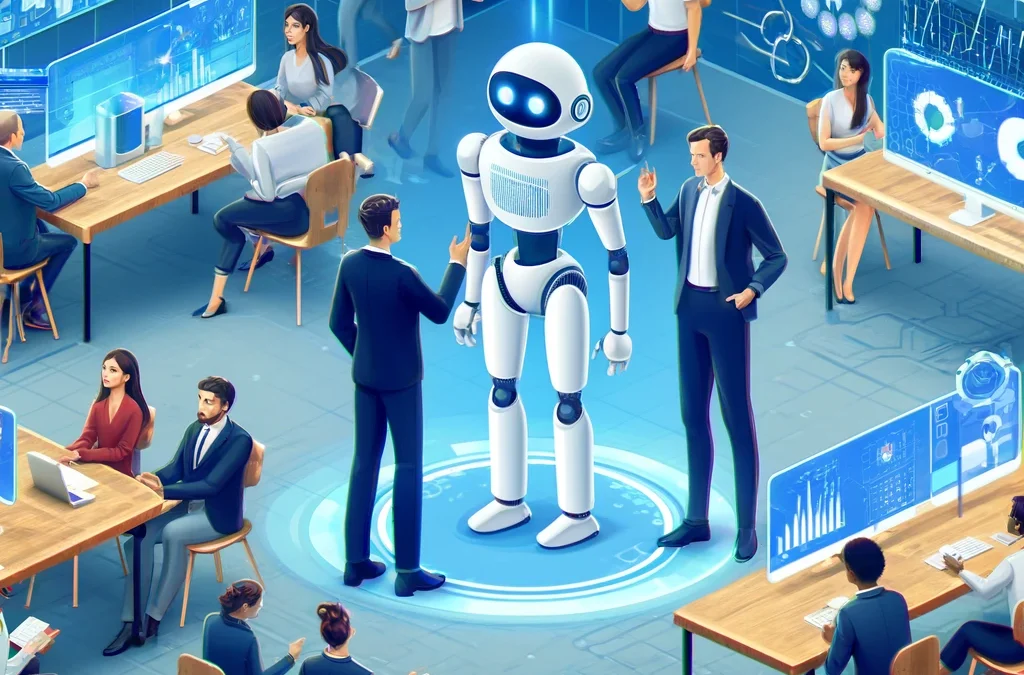
Pair Programming with AI: A Key to Modern Development

Pair Programming with AI: A Key to Modern Development

In the world of software development, pair programming has been a popular approach for years. This technique, where two developers collaborate on the same task, has proven effective in improving code quality, reducing errors, and speeding up learning. However, the evolution of artificial intelligence (AI) has brought about a radical shift in this methodology. Nowadays, pair programming with AI should be the new standard, and companies that fail to adopt it risk falling behind.

The Strategic Value of Pair Programming with AI

Software development is faster and more complex than ever, and AI plays a crucial role in this context. AI tools, such as code assistants and generative AI engines, are transforming the way developers work. It’s no longer just two humans collaborating; now, it’s a programmer working alongside an AI that suggests solutions, corrects errors in real-time, and optimizes code as it’s written.

This collaboration between developers and AI brings significant benefits:

  • Faster development: AI can generate solutions and suggestions in seconds, something that might take a developer minutes or even hours.
  • Error reduction: Tools like GitHub Copilot, Claude Sonnet, or ChatGPT can detect potential errors and fix them before they turn into major problems.
  • Continuous learning: Developers can learn and improve their skills while working with AI, which suggests new techniques or approaches.

Why AI Should Be Mandatory in Development Environments

The productivity and efficiency that AI offers cannot be ignored. For this reason, companies should make the integration of AI tools into developers’ workflows mandatory. Instead of being seen as an additional option or a “nice-to-have,” AI-based solutions should become an essential part of the modern development environment.

AI not only automates repetitive tasks but also frees developers to focus on more strategic areas, such as system architecture or creating innovative new features. Additionally, it reduces developers’ mental load by handling tedious tasks like error correction or writing repetitive code that’s often necessary in many projects.

The Future of Development Focuses Less on Programming Languages

For a long time, being a developer meant mastering multiple programming languages deeply. However, AI is starting to make this intensive specialization unnecessary. What matters today is not knowing every detail of a language but deeply understanding the problems being solved and the purpose of the software being developed.

AI can translate an idea or a functional requirement into code across multiple languages, without the developer needing to be an expert in all of them. This democratizes software development, allowing more people, even those without years of experience, to effectively contribute to the creation of technological solutions. This changes the way software projects are approached: creativity and understanding of the problem take precedence over specific technical knowledge.

AI Bridges the Gap of Specialization

Tools like Copilot, Claude, or ChatGPT can already write code in various languages, suggesting optimal solutions or helping solve problems without the need for exhaustive knowledge. As a result, companies should no longer require all their developers to be experts in every programming language they use. Instead, they should foster an environment where the ability to ask the right questions and structure solutions is more important than manually coding.

This doesn’t mean that knowledge of programming languages is irrelevant, but it’s no longer as high a barrier as it once was. What AI has shown is that the key lies in understanding what needs to be achieved, not in how to write it in a specific language. AI can take care of that part.

It’s Crucial for Companies to Accelerate AI Adoption

To remain competitive, tech companies must take urgent steps to ensure their developers have access to the necessary AI tools. Failing to adopt this technology is a risky decision that could result in a loss of productivity and competitiveness compared to companies that do.

Moreover, by integrating AI, companies can reduce operational costs and accelerate project delivery times, as AI optimizes the software development lifecycle. Organizations should also consider implementing training programs on AI tools to maximize the benefits of this technology.

Pair Programming Between Humans Is a Thing of the Past

In the past, pair programming was an excellent way to share knowledge, detect errors, and speed up learning within a team. But today, with AI tools, this human-to-human practice is becoming obsolete. AI can take on the role of the second programmer more efficiently, suggesting real-time corrections, optimizing code performance, and offering solutions based on vast databases of knowledge and prior experience.

A New Era of Development Has Begun

Pair programming with AI is no longer optional; it’s a necessity that companies must implement to maximize productivity and quality in their software projects. The requirement to be an expert in multiple programming languages is quickly diminishing, thanks to AI’s ability to fill this gap. What’s important is that developers and companies understand what’s needed and how to structure solutions, letting AI handle the coding details.

Adopting this approach will not only improve the quality and speed of software development but will also allow developers to focus on what truly matters: solving real-world problems. Companies must accelerate their adoption of AI and ensure that all their developers have these tools in their daily work—or risk being left behind.
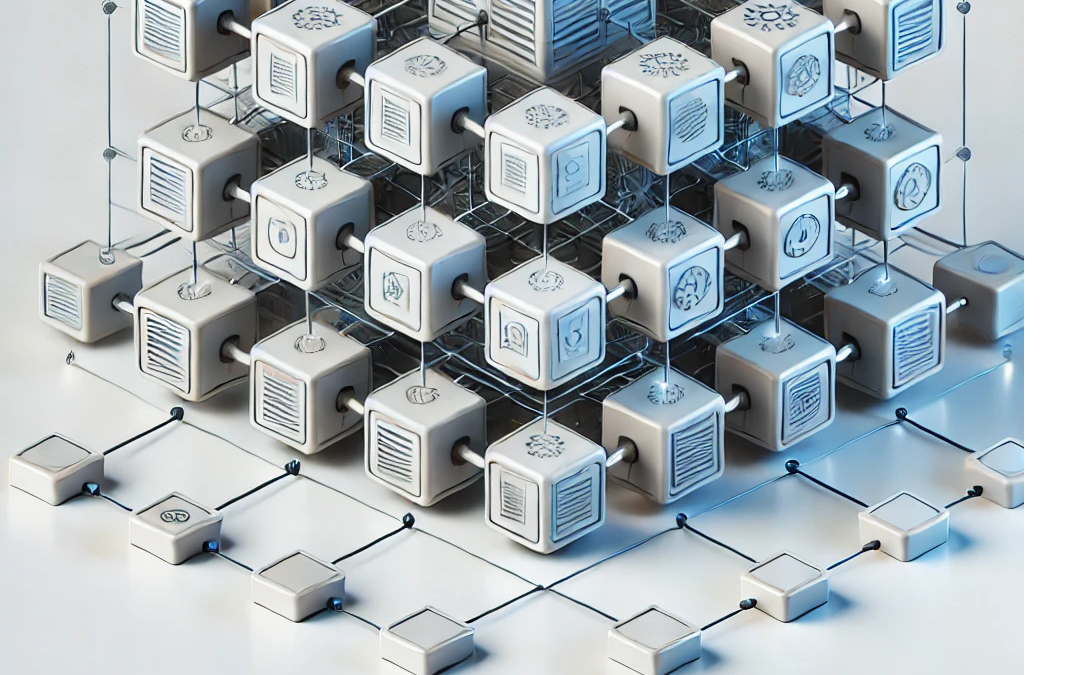

Modular Monolithic and Hexagonal Architecture: An Integrated Approach for Flexibility and Scalability in Software Development

Modular Monolithic and Hexagonal Architecture: An Integrated Approach for Flexibility and Scalability in Software Development

In the field of software development, monolithic architecture has been a traditional choice due to its simplicity. However, as applications grow in complexity, the limitations of a classic monolith become evident. This is where modular monolithic architecture and hexagonal architecture emerge as complementary solutions that can transform the way we design and maintain robust, flexible, and scalable systems.

What is Modular Monolithic Architecture?

Modular monolithic architecture is an evolution of traditional monolithic architecture, where a system is divided into independent modules, each with its own clearly defined functionality. These modules are developed and maintained independently but are deployed as a single unit. This modularity allows for code reuse, facilitates maintenance, and improves scalability without the challenges of migrating to a microservices architecture.

Key Features:

Single Deployment Unit:

  • The entire system is deployed as a single unit, simplifying operations and monitoring.
  • Facilitates version management and rollbacks.

Internal Organization in Independent Modules:

  • Each module encapsulates a specific business functionality.
  • Modules can be developed, tested, and maintained independently.

Well-Defined Interfaces Between Modules:

  • Modules communicate through clearly defined internal APIs.
  • Reduces coupling and facilitates internal changes within the modules.

High Cohesion Within Modules:

  • Each module groups related functionalities.
  • Improves code comprehension and maintainability.

 Low Coupling Between Modules:

  • Modules have minimal dependencies on each other.
  • Facilitates parallel development and independent evolution of modules.

Why Adopt Modular Monolithic Architecture?

Operational Simplicity:

  • Maintains the ease of deployment and operation of a monolith.
  • Reduces infrastructure complexity and operational costs.

Development Flexibility:

  • Allows teams to work on separate modules without affecting the entire system.
  • Facilitates the incorporation of new technologies or frameworks in specific modules.

Gradual Scalability:

  • Facilitates future transition to microservices if necessary.
  • Allows for horizontal scaling of specific modules according to demand.

Improved Maintainability:

  • Internal modularity enhances code comprehension and maintenance.
  • Facilitates system refactoring and evolution.

Optimized Performance:

  • Avoids the communication overhead between services present in distributed architectures.
  • Maintains the efficiency of in-process calls.

Simplified Data Management:

  • Allows for the use of a single database, simplifying consistency and transactions.
  • Offers the flexibility to segregate data by module if necessary.

Gradual Technological Transition:

  • Facilitates the gradual modernization of legacy systems.
  • Allows for the coexistence of old and new technologies in different modules.

How to Implement Modular Monolithic Architecture?

The successful implementation of a modular monolithic architecture requires careful planning and the adoption of key practices and principles:

Define Module Boundaries:

  • Use techniques like Domain-Driven Design (DDD) to identify clear and consistent business domains.
  • Establish specific responsibilities for each module based on business capabilities.
  • Ensure that each module has a well-defined and self-contained function within the overall system.

Design Module Interfaces:

  • Create well-defined internal APIs that act as contracts between different modules.
  • Implement simple, cohesive interfaces that encapsulate the internal complexity of each module.
  • Establish standardized communication mechanisms between modules.
  • Ensure that these interfaces are stable and well-documented to facilitate parallel development.

Implement Abstraction Layers:

  • Use dependency inversion principles to decouple the modules.
  • Implement dependency injection to manage relationships between different system components.
  • Create abstractions that allow for internal module implementations to be changed without affecting others.

Manage Data:

  • Consider using separate databases or schemas for each module if necessary.
  • Implement patterns to abstract data access within each module.
  • Ensure data integrity and consistency throughout the system.

Implement Best Practices:

  • Define clear code and architecture standards that all teams must follow.
  • Implement a code review process that includes cross-reviews between teams from different modules.
  • Establish an architecture committee to oversee system evolution and make key decisions.
  • Create and maintain comprehensive documentation of the architecture and module interfaces.

Plan for the Future:

  • Design each module with the possibility that it may become an independent microservice in the future.
  • Implement internal messaging systems that can evolve into distributed messaging systems if needed.
  • Maintain modularity and low coupling as guiding principles in all ongoing development.

Optimize Performance:

  • Implement module-level caching strategies to improve overall system performance.
  • Use lazy loading techniques between modules when appropriate to optimize resource usage.
  • Establish a monitoring system that allows for the identification and optimization of critical interactions between modules.

Manage System Evolution:

  • Establish a clear process for adding new modules or modifying existing ones.
  • Implement a versioning system for module interfaces, allowing for gradual and non-disruptive updates.
  • Develop strategies to handle and resolve circular dependencies between modules when they arise.

Integrate Hexagonal Architecture Principles:

  • Apply the concepts of ports and adapters within each module to separate business logic from implementation details.
  • Design each module with a clear distinction between the business core and external interfaces.
  • Use this structure to facilitate testing and maintenance of each module independently.

Foster a Culture of Modularity:

  • Educate development teams about the principles and benefits of modular monolithic architecture.
  • Promote a “think in modules” mindset throughout the organization.
  • Encourage collaboration between teams to maintain architectural consistency across the system.

Summary

Implementing a modular monolithic architecture, integrated with hexagonal architecture, is an evolutionary process that requires commitment and discipline but offers significant benefits to organizations. This approach combines the robustness of traditional monoliths with the flexibility and maintainability of more modern architectures, balancing the best of both worlds. By following the appropriate principles and practices, companies can create systems that not only improve software quality but also lay the groundwork for future evolutions, facilitating a transition to microservices if business needs require it, and providing an adaptable, scalable, and durable solution for software development.

Effective Strategies for Diagnosing and Resolving Microservices Failures in Cloud Environments Using Artificial Intelligence

Effective Strategies for Diagnosing and Resolving Microservices Failures in Cloud Environments Using Artificial Intelligence

In the era of modern technology, microservices have revolutionized software architecture, allowing for greater agility and scalability. However, when a microservice fails, it can significantly impact the operation of the entire system. Here is a detailed guide on how to effectively diagnose and resolve microservices failures in cloud environments, incorporating artificial intelligence to improve the efficiency and accuracy of the process.

Monitoring and Alerts with AI Review alerts issued by monitoring tools (Prometheus, Grafana, AWS CloudWatch, etc.) to get initial clues about the nature of the failure. Use AI algorithms to analyze patterns in alerts and predict potential future failures. Tools like Dynatrace and Datadog use AI to correlate events and detect anomalies before they cause serious problems. These tools can provide predictive analytics and proactive alerts, allowing DevOps teams to act before issues impact the system.

Automated Log Review Implement AI tools to analyze startup and error logs for error messages, unhandled exceptions, or stack traces. Examples of such tools are ELK Stack (Elasticsearch, Logstash, Kibana) with integrated Machine Learning, and Splunk, which use AI to quickly identify patterns and anomalies. These tools can correlate events and provide actionable insights that might be overlooked by humans.

System Health with AI Use health endpoints (such as /actuator/health in Spring Boot) to verify the state of the microservice. Integrate AI to continuously analyze this data and detect deviations that could indicate an imminent problem. Tools like New Relic and AppDynamics use AI to monitor system health in real-time, providing automatic diagnostics and recommendations to maintain optimal system performance.

Resources and Configuration Review CPU, memory, I/O usage, and other metrics to ensure the microservice has not exhausted available resources. Use AI to optimize resource allocation and predict future needs. For example, AWS Auto Scaling with AI can automatically adjust resources according to demand, ensuring microservices have the necessary resources without manual intervention.

Deployment and Scalability If there has been a recent deployment, review code changes and deployment scripts. Implement CI/CD (Continuous Integration/Continuous Deployment) with AI tools like GitHub Copilot and Jenkins X to automate testing and ensure auto-scaling policies are correctly configured and functioning. These tools can suggest code improvements and automate deployment processes, reducing the risk of human errors.

Integration and Unit Testing Run unit and integration tests to verify if the problem can be replicated in a controlled environment. Use AI to generate additional test cases and optimize existing tests. Tools like Test.ai and Applitools use AI to create and run tests more efficiently, detecting issues that might not be captured by traditional testing.

Networking Check network connectivity between the failed microservice and its dependencies, and between the microservice and the load balancer. Implement AI solutions to monitor and optimize the network in real-time. Tools like ThousandEyes and Kentik use AI to provide deep visibility and analysis of the network, quickly identifying and resolving connectivity issues.

Code Review If logs and metrics do not clearly indicate the problem, conduct a code review to look for potential logical errors, concurrency issues, etc. Use AI-based code analysis tools like SonarQube and DeepCode to detect potential problems more quickly. These tools can suggest refactorings and optimizations based on industry best practices.

Communication and Documentation Inform the development and operations team about the incident and the steps being taken to resolve it. Document all findings and steps taken to resolve the problem, using AI tools to automate and improve the accuracy of documentation. Tools like Atlassian Confluence with integrated AI can help generate and organize documentation efficiently, ensuring all relevant information is available to the team.

Solution and Prevention Apply the necessary changes to restore the service. Implement long-term solutions to prevent the issue from recurring, such as improvements in monitoring, code refactoring, resource optimization, etc. Use AI to design and evaluate preventive solutions, as well as to predict and mitigate future problems. Platforms like IBM Watson and Google AI can provide insights and recommendations based on historical data analysis and usage patterns.

Conclusion

Resolving microservices issues requires a structured and meticulous approach. By incorporating artificial intelligence into these steps, you can ensure a quicker and more effective recovery, as well as implement more robust preventive measures to improve the resilience of your system. The key lies in constant monitoring, detailed log review, resource and configuration verification, and effective team communication, all powered by AI.

Hybrid Architectures with AI and Humans: Exploring Effective Collaboration

Hybrid Architectures with AI and Humans: Exploring Effective Collaboration

In the age of digital transformation, designing systems that combine artificial intelligence (AI) and human decisions has become a crucial necessity for many organizations. Hybrid architectures, where AI and humans work together, offer a powerful synergy that can take efficiency and innovation to new levels.

What are Hybrid Architectures?

Hybrid architectures are systems designed to integrate the analytical and processing capabilities of AI with human intuition, creativity, and critical judgment. These systems allow both parties to play complementary roles, maximizing the strengths of each. AI can handle repetitive tasks and analyze large volumes of data, while humans can focus on strategic decision-making and situations requiring empathy and contextualization.

Benefits of Hybrid Architectures

Improved Efficiency: AI can process data at speeds and volumes impossible for humans, allowing businesses to optimize processes and reduce timeframes.

Increased Precision: AI algorithms can identify patterns and trends in data with high accuracy, helping to reduce human errors.

Informed Decision-Making: The combination of AI-analyzed data and human experience can lead to more informed and balanced decisions.

Continuous Innovation: Collaboration between AI and humans fosters a continuous innovation environment, where machines learn from humans and vice versa, constantly improving processes.

Challenges and Considerations

Integration and Maintenance: Designing and maintaining hybrid systems can be complex and costly, requiring careful planning and specialized resources.

Ethics and Transparency: It is crucial to ensure that AI systems operate transparently and ethically, avoiding biases and ensuring fairness in decisions.

Training and Adaptation: Employees must be trained to work alongside AI, understanding its capabilities and limitations to make the most of the collaboration.

Application Examples

Customer Service: Chatbot systems that handle basic queries, escalating complex cases to human agents. This not only improves efficiency but also allows for more personalized attention in complex situations.

Healthcare: AI that analyzes medical images, assisting doctors in making more accurate and faster diagnoses. Systems can detect anomalies that might go unnoticed, allowing for early interventions.

Finance: Algorithms that detect fraud in real-time, while financial analysts interpret this data to make strategic decisions. This collaboration can prevent significant losses and improve security.

Future of Hybrid Architectures

The future of hybrid architectures is promising. As AI continues to advance, its integration with human judgment will become even more critical. Companies that adopt these systems will be able to quickly adapt to market changes, continuously innovate, and maintain a competitive edge. The key to success will be finding the right balance, where technology complements and enhances human skills, rather than replacing them.

Hybrid architectures represent the future of collaboration between humans and machines. By ensuring effective integration and optimal collaboration, companies can maximize the strengths of both, driving innovation and maintaining a competitive advantage in the market.

The Future of Solution Architecture with Artificial Intelligence

The Future of Solution Architecture with Artificial Intelligence


Artificial intelligence (AI) is redefining the technological landscape, and solution architects are at the heart of this revolution. These professionals, responsible for designing and planning technological systems, face a future where AI can enhance their creativity and efficiency, or even change their role significantly.

The Current Role of the Solution Architect

The solution architect is the professional responsible for designing software systems that meet the needs of businesses. This work involves understanding business requirements, designing scalable architectures, and working with development teams to implement robust solutions. Solution architects must balance considerations such as performance, security, scalability, and cost when designing systems that meet organizational objectives.

AI as a Collaborator

In the future, AI is expected to become a key collaborator for solution architects. Advanced AI tools could assist in various tasks, such as:

Optimizing Architectures: AI has the potential to analyse different architectures and suggest the most efficient one in terms of performance, cost, and scalability. AI algorithms can evaluate multiple configurations and predict their performance under different conditions, allowing architects to make informed decisions.

Automating Repetitive Tasks: Solution architects often face repetitive tasks, such as documentation, monitoring, and testing. AI can automate these processes, freeing up time for architects to focus on creative design and innovation. For example, AI-powered tools can generate technical documentation from designs or source code or monitor systems in real-time to detect anomalies.

Generating New Ideas: AI can also help solution architects explore innovative approaches and foresee potential design problems. AI systems can analyse patterns in large datasets, identify emerging trends, and suggest new solutions. This collaboration can inspire architects to consider options they wouldn’t have otherwise.

Improving Design Practices

AI also has the potential to improve system design practices through:

Predictive Analysis: By anticipating failures and bottlenecks, AI enables architects to design more robust systems. Machine learning algorithms can analyse system behaviour under different loads and predict when and where problems may occur. This allows architects to design solutions that avoid these issues before they arise.

Enhanced Collaboration: AI tools can facilitate communication and collaboration among geographically distributed teams. AI can translate technical documents, summarize discussions, and manage projects efficiently, improving design coherence and quality. For example, AI tools can analyse discussions in development forums and summarize key decisions, helping teams stay aligned.

Continuous Adaptation: AI-driven systems can adapt as business needs change, allowing architects to create more flexible and sustainable solutions. AI systems can monitor system performance and usage and adjust their configuration in real-time to optimize performance. This allows architects to design systems that evolve over time, rather than requiring frequent redesigns.

Conclusion

The future of solution architecture is exciting and full of opportunities, thanks to the integration of artificial intelligence. Architects who embrace this technology will be able to design more innovative, efficient, and resilient systems. AI has the potential to transform the role of the solution architect, becoming a collaborator with artificial intelligence, creating together solutions that surpass what either could do alone.